Use Case Title
Empty Shelf Detection – Detect Empty Spaces on Snack Shelves in Shops
 Team Members
- Yash Patil
- Ankit Patil
- Sanidhya Patil
- Shreya Patil
- Shaunak Paul
 Use Case Importance
Empty shelves lead to lost sales and customer dissatisfaction. Our solution helps shopkeepers monitor shelf status in real time and alerts them to refill snacks before customers are impacted.
 Data Collection and Annotation
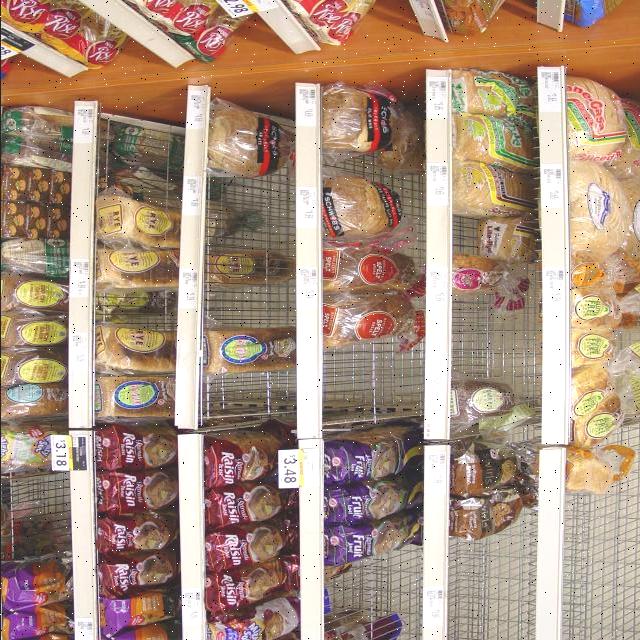
We collected over 1000+ real-world images of snack shelves using mobile phones in various store lighting conditions.
We used Roboflow for annotation.
Classes annotated: "Empty Space in shelf"
Images were labeled and split into training, validation, and test sets.
Data was augmented using brightness adjustments and flipping for better generalization.
train - 1,344 images
valid - 100 images
test - 70 images
Sample Images:
 Model Training and Validation
We trained a YOLOv9 model using 1,344 training and 100 validation images.
Metrics monitored: Precision, Recall, mAP, and Loss
After detecting some false positives, especially in cluttered shelves, we collected more targeted shelf images and increased training epochs.
 Model Deployment and Demo Video
The model was deployed to the YOLOvX mobile app.
Deployed Model: best.pt
Live testing showed real-time inference worked well with good accuracy, although some minor lag was observed on lower-end devices.
Performance: ~5–10 FPS on mid-range smartphones with accurate bounding box predictions in most lighting and motion scenarios.
Demo Video Link : Empty_Space_Detection_Model – Google Drive
 Conclusion
Our model, trained using YOLOv9, achieved over 60% accuracy in identifying empty shelf spaces during real-world tests.
We learned that accurate annotation, data variety (lighting, angles), and consistent formatting are crucial for high-performance detection. Mobile deployment adds real-time utility but requires careful optimization for responsiveness.